

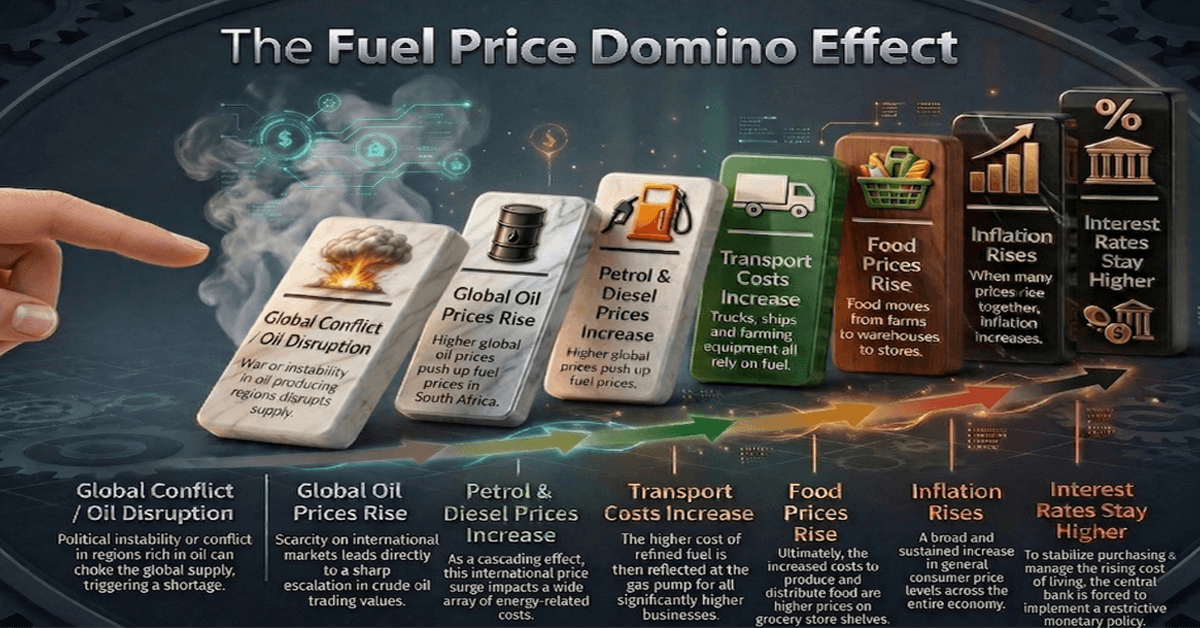
A petrol price hike hits more than your tank. Fuel sits inside the cost of transport, farming, manufacturing, and retail. When fuel gets pricier, moving goods costs more. Shops and suppliers then pay more to stock shelves. Over time, many of those costs land on you through higher prices on food and daily essentials. When enough prices rise, inflation rises too. Central banks then keep interest rates higher for longer.
Oil trades in global markets. So events far from South Africa can move local fuel prices. Wars, political tension, and supply disruptions in major producing regions can push crude prices up. South Africa buys much of its crude oil from Nigeria, yet local fuel prices still track global oil prices. When crude rises overseas, local petrol and diesel often follow soon after.
Diesel plays a big role. Trucks that move groceries and building materials run on diesel. So do many ships and a lot of farm equipment. When diesel rises, the cost of getting food from farm to shelf rises with it. If global supply stays tight during the current Middle East conflict, last week’s increase may not be the last.
Higher fuel prices raise transport costs across the supply chain.
Trucks delivering food to supermarkets pay more for diesel.
Importers pay more for shipping and inland transport.
Businesses pay more to move stock between warehouses and stores.
Some firms absorb the increase at first. If high fuel prices last, they pass part of the cost to shoppers.
Food prices often react fast. Food moves through many stages before you buy it. Farms send produce to processors. Processors ship to warehouses and distribution centres. Retailers then move stock to stores. Each stage relies on transport, cold storage, and tight delivery schedules. When fuel costs rise, each leg costs more. Those increases show up in supermarket prices.
When many prices rise together, inflation climbs. Fuel shocks often trigger cost driven inflation. Businesses face higher input costs, so they lift prices to protect margins.
The South African Reserve Bank tracks inflation closely. If fuel and food keep rising, the bank may expect wider price pressure. Businesses keep raising prices. Workers ask for higher wages to cover living costs. To limit inflation, the Reserve Bank can keep rates unchanged for longer than markets expect, or raise them.
A global oil shock often sets off a chain reaction.
Fuel prices rise.
Transport costs rise.
Food prices rise.
Inflation rises.
Interest rates stay higher for longer.
So a shift in oil markets thousands of kilometres away can still squeeze household budgets in South Africa.